
Once your septic tank has been emptied, the waste does not simply disappear. What happens next is an important part of responsible septic tank waste disposal.
Collected waste needs to be transported and managed in accordance with environmental rules. Depending on exactly what has been collected, its composition and how it will be treated, there are specific requirements governing where it can go and what can be done with it.
For homeowners and businesses, this raises an important question: do you know where the company emptying your septic tank takes your waste?
At FES 24/7, this is something we believe customers should be asking. With more than 26 years of experience in drainage and wastewater management, including 20 years with Anglian Water, Don Woodbine has seen first-hand why responsible disposal matters.
What Should Happen To Septic Tank Waste After Collection?
In simple terms, the company emptying your septic tank should not just collect the contents and dispose of them wherever is cheapest or most convenient.
The Environment Agency has specific rules covering sludge and other waste from non-mains sewage systems, including septic tanks, cesspools, treatment plants and chemical toilets.
Some residual septic tank sludge can legally be spread on agricultural land, but only where it is suitable and the relevant requirements are met. This distinction is important because spreading septic waste on a field is not automatically illegal.
However, the rules are much more specific than simply emptying a tanker onto agricultural land.
Environment Agency guidance states that septic tank sludge must not be spread to agricultural land under these rules if, for example, what has been collected is not just residual sludge or it has been mixed with other waste in a collection tanker. Those wastes need to be managed differently.
Businesses transporting waste in England must also be appropriately registered as waste carriers with the Environment Agency.
That is why responsible septic tank emptying involves more than removing waste from your property. Collection, transport and lawful disposal are all part of the job.
Why An Extremely Cheap Septic Tank Emptying Quote May Be Worth Questioning
Everyone wants a fair price, and a lower quote does not automatically mean someone is doing anything wrong.
However, an unusually cheap quote is worth asking questions about.
There are genuine costs involved in collecting, transporting and disposing of septic and cesspit waste correctly. This has become particularly noticeable in rural parts of Norfolk, where we have encountered operators using tractors and trailers to collect waste at prices legitimate waste businesses can struggle to match.
Don has seen local prices of around £70 to £100 being offered for some collections.
By comparison, a 4,000-gallon cesspit where we estimated the disposal charge through Anglian Water alone would have been approximately £280. That figure was before accounting for the vehicle, fuel, travelling time and labour involved in completing the job.
These are examples from our own experience rather than standard industry prices, but they demonstrate an important point:
There is a difference between the cost of taking waste away and the cost of taking it away and disposing of it responsibly.
The Problem With Illegal Tipping On Agricultural Land
Working across a predominantly rural area, Don, our director, says he has personally encountered operators collecting septic waste before illegally tipping it onto fields.
He has even described seeing tractors and tankers entering nearby agricultural land to discharge collected waste.
For legitimate operators, this creates an unfair commercial problem. A company avoiding lawful disposal costs can potentially quote considerably less than a business paying the appropriate costs to transport and dispose of its waste.
More importantly, uncontrolled or inappropriate waste disposal can create risks for soil, water and the wider environment.
Environment Agency rules covering waste spread to land are designed to prevent precisely these problems. Where waste is spread under an environmental permit, it must provide agricultural or ecological benefit and activities must be managed to minimise pollution risks.
The Environment Agency also makes clear that activities involving sewage and septic tank sludge must not cause or be likely to cause pollution, harm human health, create risks to water, soil, plants or animals, or create unacceptable nuisance.
Can Septic Tank Sludge Ever Be Legally Spread On Fields?
Yes, under specific circumstances.
This is an important distinction.
Environment Agency guidance says residual sludge from septic tanks and similar non-mains domestic systems can be spread on agricultural land when the material is suitable and the requirements of the Sludge (Use in Agriculture) Regulations are followed.
There are restrictions around how the sludge is used. For example, the guidance establishes waiting periods before animals can graze or certain crops can be harvested after application. It also recommends using treated septic tank sludge.
What is not acceptable is assuming that anything removed from a septic tank can simply be tipped onto any convenient field.
Modern tanks may be completely emptied rather than having only residual sludge removed. If the collected material does not meet the relevant requirements, or has been mixed with other waste in the tanker, different disposal rules apply.
For a customer, you do not need to become an expert in waste regulations. You simply need confidence that the person taking responsibility for your waste understands and follows them.
How Can You Check That Your Septic Waste Is Being Handled Responsibly?
Before choosing someone to empty your septic tank or cesspit, asking a few straightforward questions can provide useful reassurance.
Are You Registered To Carry Waste?
Businesses transporting waste as part of their operations generally need to register as waste carriers. The Environment Agency maintains a public register, allowing customers to check registered organisations.
Where Will My Waste Be Taken?
A professional operator should be able to explain what happens to the contents after they leave your property.
You do not need a technical breakdown of the entire waste treatment process, but there should be a clear answer about how the waste is being managed.
Does The Quote Include Proper Disposal?
If one quote is dramatically cheaper than every other price you receive, it is reasonable to ask why.
Price differences can have perfectly legitimate explanations, including distance, tank size, accessibility and the volume being removed. However, responsible disposal has a cost, so make sure you are comparing like for like.
What Exactly Is Being Collected?
Septic tank sludge, complete septic tank contents, cesspit waste and other wastewater are not necessarily treated in the same way.
The Environment Agency specifically distinguishes between residual septic sludge suitable for certain agricultural applications and other collected wastes that need to be managed differently.
An experienced operator like ourselves should understand what they are collecting and the appropriate route for dealing with it.
Why Responsible Waste Disposal Matters To Rural Communities
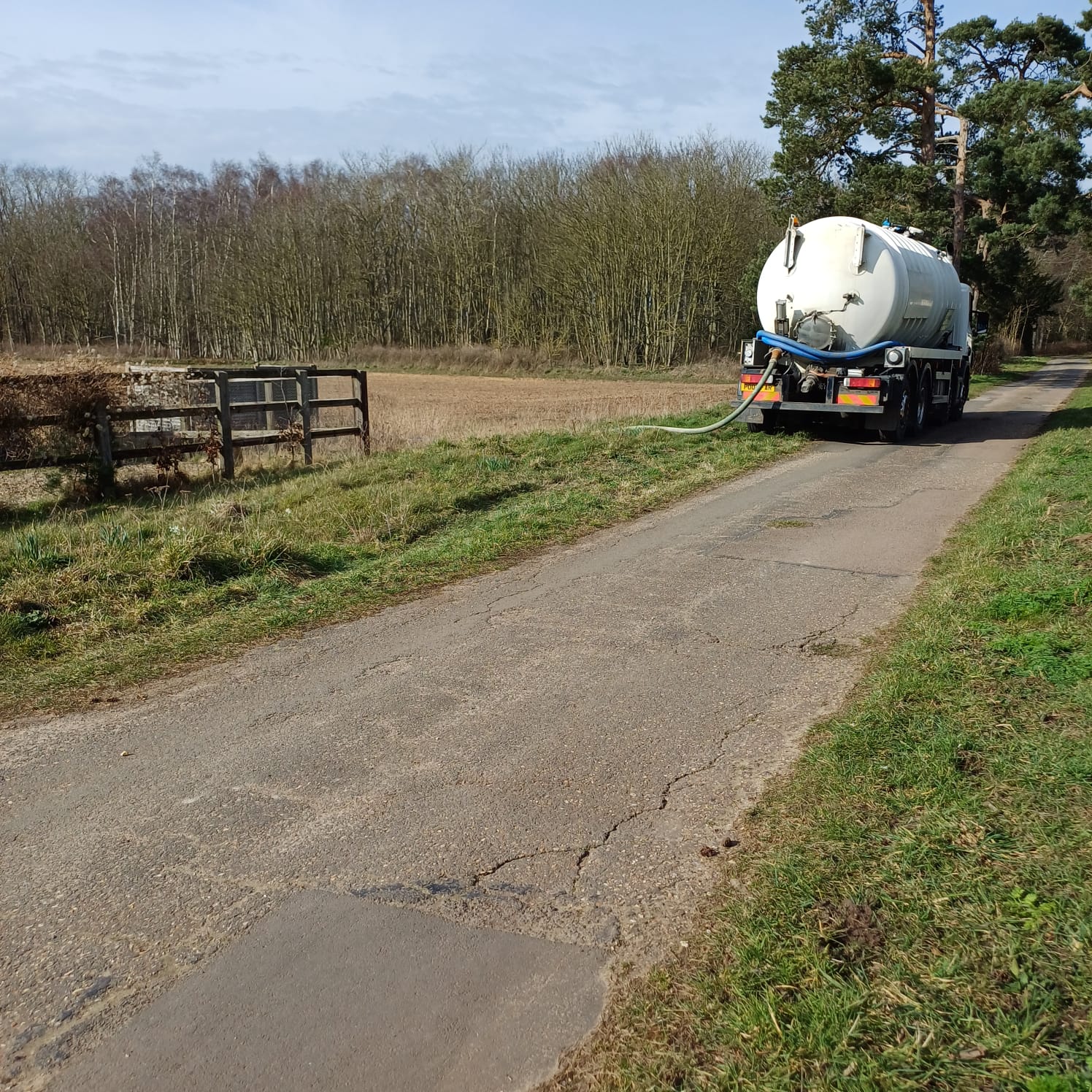
Septic tanks are particularly common around rural properties that are not connected to mains sewerage.
That means responsible waste management is especially important across agricultural and rural communities.
Poor disposal practices have the potential to affect more than the property where the septic tank originated. Waste must be managed in a way that protects land, watercourses, groundwater, people, animals and the wider environment.
The rules surrounding land spreading recognise this. Permitted waste spreading must be managed for agricultural or ecological benefit while minimising pollution risks.
This is why choosing someone to empty your septic tank should not be based on the collection price alone.
Responsible Septic Tank Waste Disposal in Norfolk At FES 24/7
FES 24/7 is based in Downham Market and works with residential and commercial customers across West Norfolk and North Cambridgeshire.
Responsible waste handling is a central part of how the business operates.
Don Woodbine brings more than 26 years of drainage and wastewater experience, including 20 years with Anglian Water, to the business. You can learn more about FES 24/7 and Don’s industry background.
When FES 24/7 provides septic tank emptying, the responsibility does not end when the tank is empty. Collected waste is handled with the wider disposal process in mind, rather than simply finding the cheapest way of making it disappear.
The same principle applies when dealing with related drainage and wastewater requirements: the solution needs to be practical, appropriate and environmentally responsible.
Frequently Asked Questions About Septic Tank Waste Disposal
Where Does Septic Tank Waste Go In The UK?
The disposal route depends on what has been collected and how it is classified. Waste may be taken for authorised treatment or disposal. Certain residual septic tank sludges may also be used on agricultural land where they are suitable and the relevant regulatory requirements are met.
Is It Illegal To Spread Septic Tank Waste On A Field?
Not in every circumstance. Suitable residual septic tank sludge can be spread on agricultural land under specific conditions. However, not all material removed from septic tanks qualifies, and waste spreading must comply with the relevant environmental requirements.
Do Septic Tank Emptying Companies Need A Waste Carrier Registration?
Businesses that transport waste in England generally need to register as waste carriers with the Environment Agency. Registration details can be checked through the public register. See here.
Why Do Septic Tank Emptying Prices Vary So Much?
Tank capacity, the amount being removed, access, travelling distance and disposal costs can all influence the price. A particularly cheap quote is not automatically suspicious, but it is sensible to establish whether responsible waste transport and disposal are included.
Should I Ask Where My Septic Tank Waste Is Going?
Yes. It is a reasonable question to ask any waste company. A responsible operator should be able to explain how the collected material will be handled after leaving your property.
Know Where Your Waste Is Going
Once a tanker leaves your property, it can be easy to assume the job is finished. Responsible septic tank waste disposal goes further than that.
Knowing who is collecting your waste, whether they are properly registered and how they intend to dispose of it gives you greater confidence that your septic tank is being emptied responsibly.
If your tank needs emptying and you would like to discuss the collection and disposal process before booking, contact FES 24/7 or call 01366 377588 for straightforward advice. We proudly offer eco-friendly septic tank waste removal in Norfolk and the wider area.